
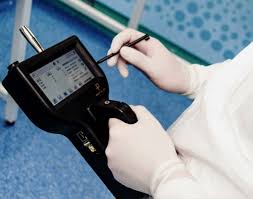
Air particle testing measures the concentration of airborne particulate matter in a controlled environment and evaluates whether that concentration meets the standards required for the work being done in that space. For cleanroom facilities in Singapore’s semiconductor, pharmaceutical and medical device sectors, this testing is a regulatory obligation. For commercial buildings, schools and healthcare facilities where indoor air quality affects the health and wellbeing of occupants, it is an increasingly recognised standard of care.
Why Airborne Particles Matter
Most particles suspended in air are invisible to the naked eye. The range that matters most in cleanroom environments runs from 0.1 microns, smaller than a bacterium, to 5 microns and above, where particles large enough to carry biological material become the concern. In semiconductor manufacturing, sub-micron particles landing on a wafer during processing cause circuit defects. In pharmaceutical sterile fill-finish operations, particles can contaminate drug products. In operating theatres, airborne particles carrying viable microorganisms create infection risk for surgical patients.
Beyond these specialised environments, indoor air quality in commercial spaces affects respiratory health, concentration and productivity. Singapore’s Building and Construction Authority and the Ministry of Manpower provide guidelines on indoor air quality for workplaces, and the National Environment Agency monitors air quality through the Pollutant Standards Index. These frameworks acknowledge that the air inside a building is not automatically safe or clean simply because the building is enclosed.
Cleanroom Classification Testing
International cleanroom standards are built on particle concentration measurements. ISO 14644-1 establishes cleanroom classes from ISO 1 (the most stringent) through ISO 9 based on the maximum permissible particle concentration at defined particle sizes. EU GMP guidelines for pharmaceutical manufacturing use a parallel classification system from Grade A to Grade D.
Air particle testing for cleanroom classification requires sampling at multiple points distributed across the cleanroom floor area, with the number of sample locations determined by the room area according to a formula in the standard. The measurement protocol, including the sample volume, the number of consecutive samples at each location, and the calculation method for demonstrating compliance, must follow the standard precisely for the results to be valid.
Classification testing is conducted at defined operational states: as-built (empty room, no equipment or personnel), at-rest (equipment installed but no production activity), and operational (full production conditions). Pharmaceutical GMP cleanrooms must be monitored in the operational state, which is the most demanding condition.
Singapore facilities seeking ISO or EU GMP cleanroom certification work with accredited testing providers who can issue valid classification reports. For customers subject to customer audits or regulatory inspections, the testing provider’s accreditation status and the format of the test report are as important as the measurement results themselves.
Indoor Air Quality Testing
Commercial offices, retail spaces, educational institutions and healthcare facilities in Singapore are subject to indoor air quality guidelines even when they are not operating as cleanrooms. The parameters measured in IAQ assessments include particulate matter at PM2.5 and PM10 size fractions, carbon dioxide, total volatile organic compounds (TVOCs), temperature and relative humidity.
PM2.5 particles, at 2.5 microns and below, penetrate deep into the respiratory tract and have documented associations with cardiovascular and pulmonary disease. Sources within commercial buildings include printers, photocopiers, cleaning products and the people in the space themselves. External sources enter through air conditioning intakes and natural ventilation.
“A healthy environment is not just about what we breathe outside. The air inside our buildings matters as much.” – Masagos Zulkifli, former Singapore Minister for the Environment.
An IAQ assessment using calibrated cleanroom air monitoring Singapore instruments provides building managers and facilities teams with the data needed to evaluate whether current HVAC settings, filtration systems and ventilation rates are maintaining acceptable air quality. Where results indicate exceedances, the testing provider can advise on the likely sources and appropriate remediation.
Selecting a Testing Provider
The quality of air particle testing depends on the equipment used, the personnel conducting the measurement, the protocol applied, and the documentation produced.
For cleanroom classification testing, verify that the provider’s equipment is calibrated with current certificates traceable to a national standards body. Confirm that the test protocol aligns with the applicable standard, that the personnel conducting the test are experienced with that standard, and that the resulting report contains all the information specified by the standard.
For IAQ assessments, verify that the instruments used cover the parameters you need to evaluate and that the detection limits are appropriate. A CO2 meter that reads to 1,000 ppm with no resolution below that level is not useful for characterising IAQ in a space where the guideline limit is 1,000 ppm and the background concentration is already 400 ppm.
Particle count testing Singapore services that combine technical competence, properly calibrated instruments and clear documentation give facilities the measurement data needed to demonstrate compliance, identify problems and make informed decisions about air handling system performance.
Air particle testing delivers value when it is conducted with the right equipment, by personnel who understand both the measurement and what it means for the specific environment being tested.