
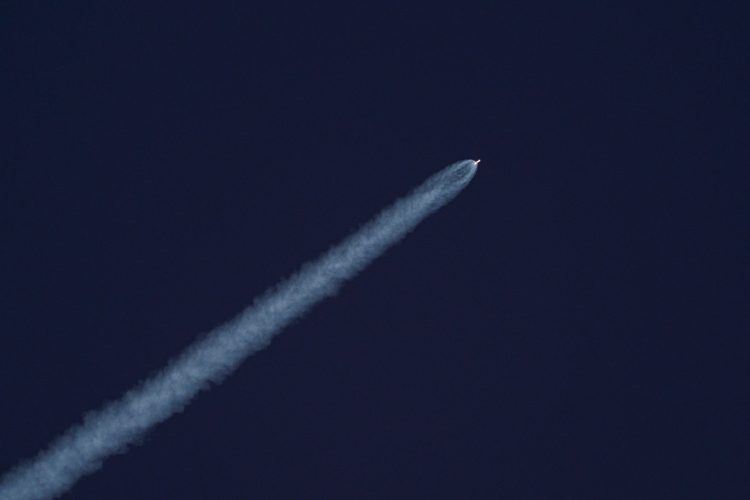
ISRO EOS-05 launch is a remarkable milestone for India’s space exploration efforts. The successful deployment of this earth observation satellite demonstrates ISRO’s growing capabilities in space technology.
Overview of ISRO EOS-05 Launch
The ISRO EOS-05 launch marks a significant milestone in India’s space exploration efforts. On the morning of the launch, the Indian Space Research Organisation successfully deployed the EOS-05 Earth Observation Satellite aboard the GSLV-F17 rocket from the Satish Dhawan Space Centre. This mission underscores India’s commitment to enhancing its capabilities in satellite technology and Earth observation.
The EOS-05 satellite is designed to provide critical data for various applications, including:
- Agriculture: The satellite will aid in monitoring crop health and managing agricultural resources.
- Forestry: It will assist in forest cover assessment and management of forest resources.
- Disaster Management: The satellite is equipped to provide timely information for disaster preparedness and response.
- Urban Planning: The data collected will help in effective urban planning and infrastructure development.
This successful launch not only enhances India’s Earth observation capabilities but also strengthens its position in the global space community. As the country continues to invest in advanced satellite technology, the ISRO EOS-05 launch is a testament to its growing prowess in the realm of space exploration.
Significance of Earth Observation Satellites
The significance of Earth Observation Satellites (EOS) cannot be overstated, especially in the context of modern science and technology. The recent ISRO EOS-05 launch underscores the vital role these satellites play in various sectors.
Earth Observation Satellites are instrumental in the following areas:
- Agriculture: They provide critical data on crop health, soil moisture, and weather patterns, enabling farmers to make informed decisions.
- Disaster Management: EOS facilitate real-time monitoring of natural disasters such as floods, earthquakes, and hurricanes, helping authorities respond effectively.
- Urban Planning: These satellites assist in mapping urban growth, identifying land use changes, and planning infrastructure projects.
- Environmental Monitoring: They are vital for tracking deforestation, pollution, and climate change, supporting conservation efforts worldwide.
Moreover, the data collected from Earth Observation Satellites contributes to scientific research and policy-making, enhancing our understanding of the planet. The successful ISRO EOS-05 launch not only reinforces India’s position in space exploration but also promises to provide valuable insights that will benefit society as a whole.
Technical Details of GSLV-F17
The GSLV-F17 rocket, employed for the ISRO EOS-05 launch, showcased remarkable engineering and precision. This mission marked the 18th flight of the Geosynchronous Satellite Launch Vehicle (GSLV) and demonstrated its capability to place heavier payloads into orbit.
With a total height of 49 meters and a lift-off weight of approximately 422 tons, the GSLV-F17 was designed with an advanced cryogenic upper stage that enhances its performance. The vehicle is equipped with three stages:
- Solid Rocket Booster: Provides initial thrust during lift-off.
- Liquid Core Stage: Utilizes liquid fuel to continue the ascent.
- Cryogenic Upper Stage: Powers the rocket into geosynchronous transfer orbit.
The launch took place from the Satish Dhawan Space Centre, Sriharikota, where the rocket achieved its intended orbit with precision. The successful deployment of the EOS-05 satellite underscores ISRO’s commitment to advancing space technology and enhancing Earth observation capabilities, vital for various applications.
Through this mission, ISRO continues to strengthen its position in the global space community while contributing to scientific research and development.
Future Missions Planned by ISRO
Following the successful launch of the ISRO EOS-05, the Indian Space Research Organisation (ISRO) is set to expand its ambitious space exploration agenda. The agency has outlined several future missions that aim to enhance Earth observation capabilities and contribute to various scientific endeavors.
Among the upcoming projects, ISRO is planning to deploy a series of advanced Earth observation satellites designed to monitor and analyze environmental changes. These satellites will not only support agriculture and disaster management but also bolster urban planning and climate change research.
- INSAT-3DR: This meteorological satellite will focus on weather forecasting and disaster warning.
- GISAT: A geostationary satellite aimed at real-time monitoring of natural disasters.
- NavIC Expansion: An initiative to expand the Navigation with Indian Constellation to enhance regional navigation services.
With the successful ISRO EOS-05 launch paving the way, these future missions reflect ISRO’s commitment to harnessing space technology for national development and global cooperation.
Impact on Environmental Monitoring
The successful launch of the ISRO EOS-05 satellite marks a significant milestone in the realm of environmental monitoring. This advanced Earth observation satellite is expected to enhance the capability of scientists and researchers in tracking environmental changes with unprecedented accuracy.
Among its many applications, the EOS-05 will play a crucial role in:
- Weather Forecasting: By providing real-time data on atmospheric conditions, the satellite will improve the accuracy of weather predictions.
- Agricultural Monitoring: Farmers will benefit from detailed insights into crop health, soil moisture, and land use, facilitating better decision-making.
- Disaster Management: The satellite’s ability to monitor natural disasters such as floods and cyclones will aid in timely responses and risk assessment.
- Climate Change Tracking: EOS-05 will contribute valuable data to understand the impacts of climate change on various ecosystems.
Furthermore, the data gathered from the ISRO EOS-05 launch will be instrumental in formulating policies that promote sustainable environmental practices. As nations face increasing environmental challenges, the role of such advanced satellites becomes ever more critical.
Conclusion: The Importance of EOS-05
The successful launch of the ISRO EOS-05 marks a pivotal moment in the realm of space exploration and satellite technology. This mission not only demonstrates India’s growing capabilities in space but also underscores the vital role that Earth Observation Satellites play in monitoring our planet’s health.
EOS-05 is designed to enhance the data available for various applications, including:
- Agriculture: Providing insights into crop health and yield predictions.
- Disaster Management: Facilitating timely responses to natural calamities through improved monitoring.
- Urban Planning: Supporting sustainable development by offering detailed land-use data.
- Environmental Monitoring: Helping track changes in ecosystems and climate patterns.
The advancements brought by the EOS-05 will significantly contribute to our understanding of environmental changes and aid in effective resource management. As ISRO continues to push the boundaries of space technology, the implications of this mission resonate beyond national borders, promising collaborative efforts in addressing global challenges. The ISRO EOS-05 launch is indeed a testament to the commitment to leveraging space technology for the betterment of society and our planet.
The ISRO EOS-05 launch marks a significant milestone in India’s space capabilities, showcasing advanced technology in Earth observation. As the ISRO EOS-05 launch successfully delivers critical data, researchers anticipate groundbreaking insights into environmental monitoring.
Photo by Dirk Schuneman on Pexels