
In a world where billions of images are uploaded every day, finding a specific face in a sea of digital content can feel impossible. This is where advanced face search technology transforms the landscape. FaceFinderAI leverages intelligent facial recognition systems to match, analyze, and identify faces across massive image datasets with remarkable accuracy and speed.
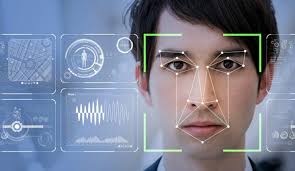
Advanced face search technology uses artificial intelligence, deep learning, and biometric mapping to detect unique facial features. Instead of relying on simple image comparison, the system analyzes facial landmarks such as eye spacing, jawline structure, nose shape, and contour patterns. These biometric markers create a mathematical representation of a face, often referred to as a facial signature.
FaceFinderAI applies these signatures to compare images, ensuring precise matches even when lighting, angles, or image quality vary. The result is an intelligent system capable of identifying faces in complex scenarios where traditional search tools fail.
How Does FaceFinderAI Deliver Accurate Image Matching?
Accuracy is the cornerstone of any face search platform. FaceFinderAI achieves high precision through multi-layered AI models that continuously learn and improve. The process begins with face detection, where the system identifies human faces within an image. Once detected, facial landmarks are mapped using neural networks trained on diverse datasets.
After mapping, the system converts facial features into numerical vectors. These vectors are compared against a database of existing facial signatures. Instead of matching entire images, the technology focuses only on key facial characteristics, reducing false positives and improving reliability.
FaceFinderAI also incorporates adaptive learning. This means that with each search, the system refines its algorithms based on performance metrics. The more it operates, the smarter and more accurate it becomes. This continuous evolution ensures consistent results in real-world applications.
Why Is AI-Powered Facial Recognition More Reliable Than Traditional Methods?
Traditional image search tools rely heavily on metadata, tags, or surrounding text. If an image lacks proper labeling, it becomes nearly invisible to search engines. AI-powered facial recognition removes this limitation entirely.
FaceFinderAI does not depend on keywords. Instead, it analyzes the visual structure of the face itself. This makes it effective even when images are cropped, resized, filtered, or partially obscured. By focusing on biometric markers rather than descriptive data, the system achieves far greater consistency.
Additionally, AI models are trained to recognize faces across different age groups, expressions, hairstyles, and accessories. Glasses, hats, makeup, or facial hair do not significantly impact detection accuracy. The system identifies underlying facial geometry, making it resilient to superficial changes.
Can Face Search Technology Work in Real-Time Environments?
Speed is as important as accuracy. FaceFinderAI is built with optimized processing pipelines that enable rapid image scanning and comparison. Advanced indexing techniques allow the system to search through large image repositories within seconds.
Real-time functionality is possible because the platform uses parallel computing and cloud-based infrastructure. This ensures that multiple search queries can be processed simultaneously without performance delays.
For organizations handling large-scale image verification or monitoring, real-time matching significantly enhances operational efficiency. Whether analyzing uploaded images or scanning live feeds, FaceFinderAI maintains consistent speed and reliability.
What Makes FaceFinderAI Stand Out in Precision Matching?
Precision depends on more than just recognizing a face. It requires distinguishing between similar-looking individuals. FaceFinderAI uses deep convolutional neural networks to analyze micro-features that are often invisible to the human eye.
Subtle differences in bone structure, facial symmetry, and proportional alignment are carefully measured. This high-level analysis minimizes mismatches and increases confidence in search results.
Another key strength is its ability to handle low-resolution images. Many images found online or in archived databases are compressed or blurred. FaceFinderAI enhances detection capability through image normalization and enhancement algorithms, allowing it to extract meaningful data even from imperfect visuals.
How Does Deep Learning Enhance Facial Recognition Accuracy?
Deep learning is the engine driving modern facial recognition systems. FaceFinderAI employs multi-layer neural architectures that mimic human visual perception. These networks learn patterns from millions of facial samples, identifying complex relationships between facial features.
Unlike static systems, deep learning models evolve. When exposed to new variations or edge cases, they adapt and update internal parameters. This adaptability allows FaceFinderAI to maintain high accuracy across diverse demographics and environmental conditions.
The system also reduces bias by training on balanced datasets. Inclusive data representation ensures fair and reliable results across different ethnicities, age groups, and genders. This commitment to balanced AI strengthens the credibility and trustworthiness of the technology.
Is Advanced Face Search Secure and Privacy-Conscious?
Security and privacy are critical considerations in facial recognition technology. FaceFinderAI integrates encryption protocols to protect stored facial signatures and search queries. Data transmission is secured using advanced cryptographic standards, minimizing risks of unauthorized access.
Additionally, the system can be configured with strict access controls. Only authorized users can initiate searches or view results. Audit trails track usage activity, providing transparency and accountability.
Privacy-conscious design also includes data minimization practices. Instead of storing raw images unnecessarily, the system focuses on encrypted facial vectors. This reduces exposure while maintaining search functionality.
What Industries Benefit from Accurate Image Matching?
Advanced face search technology has applications across numerous sectors. In digital content management, it helps organize and categorize vast image libraries efficiently. Media professionals can quickly locate specific individuals within large archives.
In security and identity verification environments, accurate matching enhances authentication processes. Automated facial recognition reduces manual effort while increasing reliability.
E-commerce platforms use face search capabilities to improve personalization and customer engagement. Educational institutions, event organizers, and social platforms also benefit from streamlined image identification processes.
FaceFinderAI adapts to diverse use cases by offering scalable solutions. Whether deployed for small databases or enterprise-level systems, the technology maintains consistent performance.
How Does FaceFinderAI Handle Challenging Conditions?
Real-world images are rarely perfect. Poor lighting, extreme angles, partial obstructions, and background clutter can complicate facial recognition. FaceFinderAI addresses these challenges through robust preprocessing techniques.
Image normalization adjusts brightness and contrast for clearer analysis. Pose estimation algorithms correct angled faces by mapping them to standardized positions. Even when only a portion of a face is visible, the system evaluates available landmarks to determine probable matches.
Advanced anti-spoofing mechanisms also detect manipulated or synthetic images. This ensures that results are authentic and reliable, reducing the risk of deceptive inputs.
Can Face Search Technology Scale with Growing Data Volumes?
Data growth is exponential. As image repositories expand, performance must remain stable. FaceFinderAI is designed with scalable architecture that accommodates increasing datasets without compromising speed.
Distributed computing frameworks allow the system to divide workloads across multiple servers. Intelligent indexing structures ensure efficient retrieval even as databases grow larger.
Scalability ensures long-term viability. Organizations investing in advanced face search technology can rely on FaceFinderAI to adapt as their image storage needs evolve.
What Is the Future of Advanced Face Search Technology?
The future of face search technology lies in enhanced accuracy, ethical frameworks, and seamless integration. FaceFinderAI continues to innovate by refining AI models and incorporating advanced neural techniques.
Emerging developments include 3D facial mapping, emotion recognition enhancements, and improved cross-platform compatibility. As hardware capabilities expand, processing speeds will increase further, enabling even more complex real-time analysis.
Ethical governance will also play a major role. Transparent usage policies, bias mitigation strategies, and privacy safeguards will define responsible implementation. FaceFinderAI is positioned to evolve alongside these standards, ensuring sustainable growth.
Why Choose FaceFinderAI for Accurate Image Matching?
Choosing the right face search solution requires balancing precision, speed, security, and scalability. FaceFinderAI integrates all these elements into a unified platform.
Its AI-driven architecture ensures high confidence matches. Real-time processing enables efficient workflows. Robust encryption protects sensitive data. Adaptive learning guarantees continuous improvement.
By focusing exclusively on advanced facial recognition and image matching, FaceFinderAI delivers a specialized solution tailored to modern digital demands. The combination of deep learning intelligence, secure infrastructure, and scalable design makes it a powerful tool for accurate image matching.
As digital ecosystems continue to expand, the ability to identify and match faces accurately becomes increasingly valuable. Advanced face search technology is no longer optional; it is essential. FaceFinderAI stands at the forefront of this transformation, redefining how faces are searched, matched, and understood in the digital age.